Make sure that your children understand that they shouldn’t share personal information with anyone they don’t know (eg. their address or name of the school they attend) and talk openly with them about the dangers of the internet, including online grooming, scammers, and hackers. Here are some handy tips on teaching children to use the internet safely.
Ensure your children are well versed in the red flags that they ought to look out for when talking to people online via their electronic devices.
- Are they following the rules?
- Do they have concerns?
- Is there a content filter that they’d like removed now they’re older?
Remember to adjust content filters as your child ages and be prepared to discuss changes to the rules.
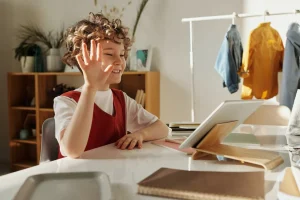
Keep track of your children’s screen time when using their electronic devices.
Everyone knows how easy it is to lose track of time when using devices. Before you know it, you realise you’ve been doom scrolling through social media pages for the last half an hour, when you should have been doing something else. Social media and games can become addictive and easily take up your children’s time, probably without them even realising it.
To make sure that your children make the most of their time on their devices, limit their screen time and ensure you have rules in place to stop them from using their devices too much. A good example of a rule to put in place that will help prevent excessive usage is to ban tablets and phones from your children’s bedroom in the evening.
Always be on the lookout for changes in your child’s behaviour.
Social media has been a concern for many parents as it has been proven to have adverse effects on children and teenagers when used excessively. Be sure to watch out for any changes in your child’s behaviour, as these could be an indication of some serious issues, such as cyberbullying, eating disorders, anxiety, or depression.
If you have any tips for how to use the internet safely.

About Debz Louise
Debz Louise is a UK-based lifestyle expert and the founder of several lifestyle blogs. Specialising in everything from interior design and home renovation to body-positive fashion and parenting, Debz brings a wealth of hands-on experience to every guide. Her mission at Stereotude is to simplify the modern world for her readers through expert curation and fiercely honest advice.